
Floating Island Research
Like many Camas residents, some of my favorite memories have been at our beloved lakes. My family has spent several weekends paddleboarding across Lacamas Lake, and I’ve hiked the trails around Round Lake more times than I can count. To a part, I owe my love for nature and the environment to these bodies of water.
In my sophomore year of high school, I heard the heartbreaking news that two dogs had died after being exposed to toxic algae blooms in these lakes. Motivated by this story, I dedicated my school research project to investigating these blue-green algae (also called cyanobacteria) and finding ways to remove them. While my experiments didn’t lead me to a practical solution, they introduced me to the innovative solution of floating islands.
Floating islands are man-made platforms planted with native vegetation. When the plants grow, their roots reach into the water below and absorb the excess nutrients, like phosphorus and nitrogen, that lead to algae blooms. By removing these nutrients, floating islands can help solve the root cause of the issue.
For my Senior Project, I designed a floating island that was put in Fallen Leaf Lake.
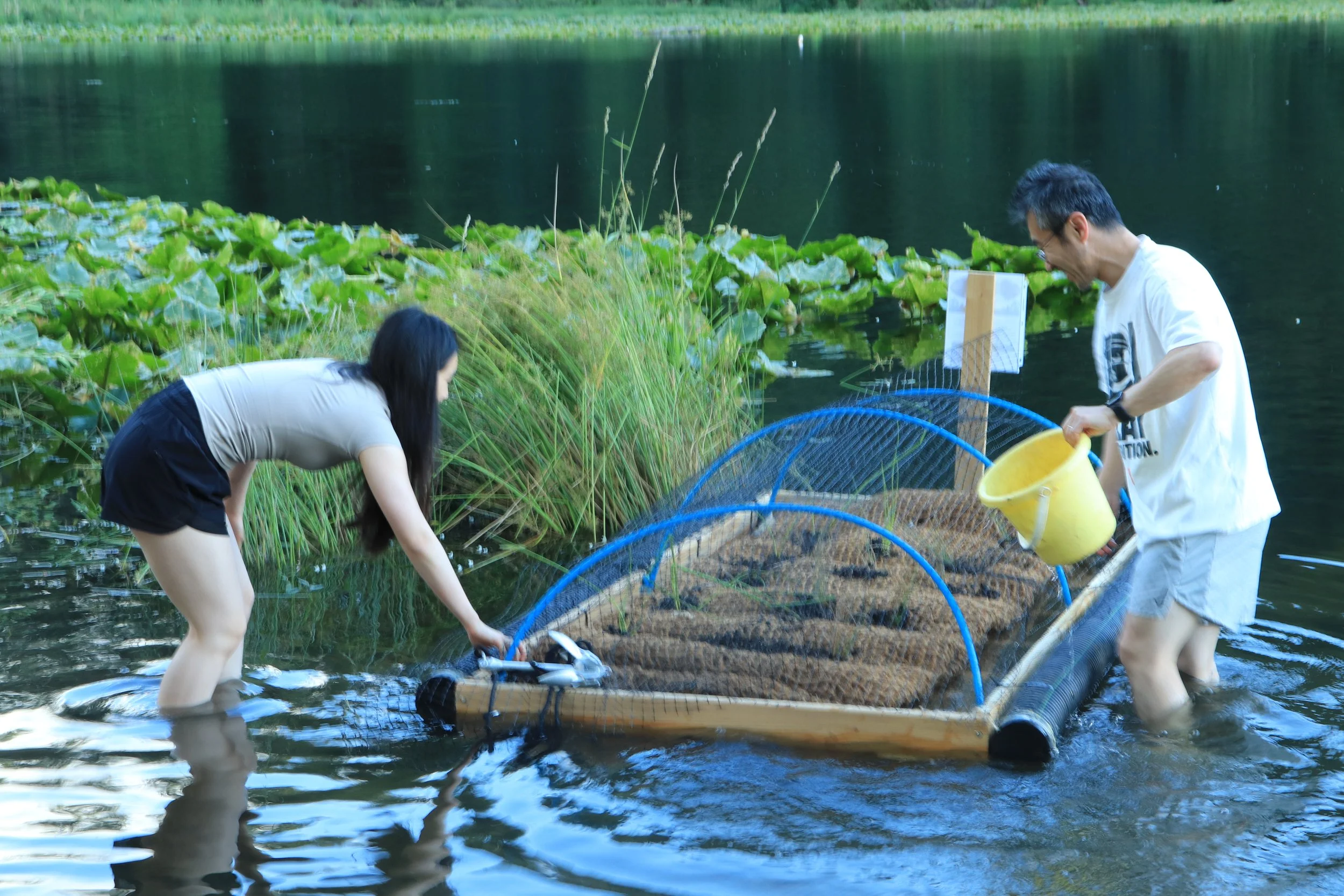
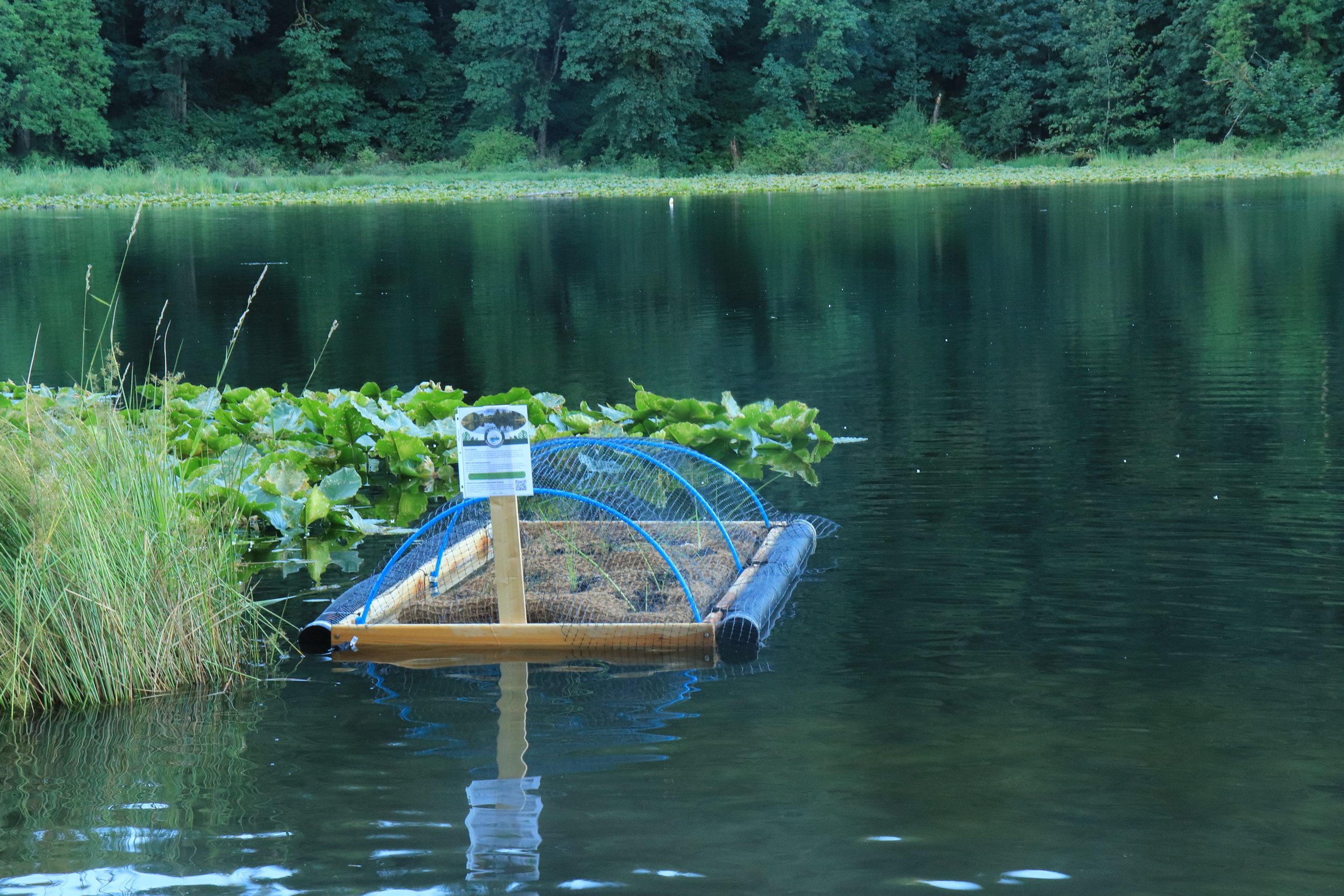

The island consists of a wooden frame supported by two drainpipes on each side for flotation. Inside the frame, there is a coir fiber mat that has Scirpus and Juncus planted inside. I also added protective netting to ensure that the plants aren’t damaged in the process of the experiments. The island will remain at Fallen Leaf Lake through the end of the summer. While this single island won’t have a significant impact on water quality and algal blooms, it is part of a larger effort to spread awareness about this issue. I hope to spark conversations about protecting the beloved lakes that our community cares about and makes Camas special.